
Design Approval and Structural Review
Before any printing begins, the design is checked not just for visual appeal but for how it folds, stands, and holds weight — structural issues are far cheaper to fix at this stage. It's one of those details that looks minor on a spec sheet but has an outsized effect on how the finished piece actually performs in the field. None of this needs to be complicated — a short written checklist covering just this point is often enough to prevent the most common version of this mistake. Getting this right doesn't guarantee success on its own, but getting it wrong is one of the more reliable ways to undercut an otherwise solid plan.
Die-Cutting and Templating
A custom die-cut template is created for the standee's specific shape, which becomes the reusable tool for cutting every unit in the production run consistently. This is one of the areas where a slightly higher upfront cost or a slightly longer timeline pays for itself well before the campaign or installation is over. Build a small buffer into both timeline and budget for this specific step; it's consistently one of the first places a project slips when things get tight. Retailers and store managers notice this more than brands often expect, and their reaction — keeping a piece up or pulling it down — is a useful, honest signal.
Printing and Lamination
High-resolution printing followed by a protective laminate layer is what gives a tabletop unit design its color vibrancy and resistance to daily handling and light exposure. In practice, teams that treat this as a checklist item rather than a strategic decision tend to revisit it — and pay for it — a second time later in the project. This tends to matter more in categories with tight margins, where even a small inefficiency here compounds across a large number of units or locations. This is one of the areas where a slightly higher upfront cost or a slightly longer timeline pays for itself well before the campaign or installation is over.
Assembly and Quality Checks
Finished units are assembled, checked for stability and print alignment, and sample-tested before the full batch is packed for distribution to outlets. The difference rarely shows up in the initial proposal — it shows up a few weeks later, once the first batch or installation is out in the real world. Revisiting this once a quarter, rather than only at the start of a new campaign, keeps small issues from quietly becoming expensive ones by the time anyone notices. The gap between a well-planned outcome and a rushed one here is usually not subtle — it tends to be visible to anyone who sees both side by side.
Final Word
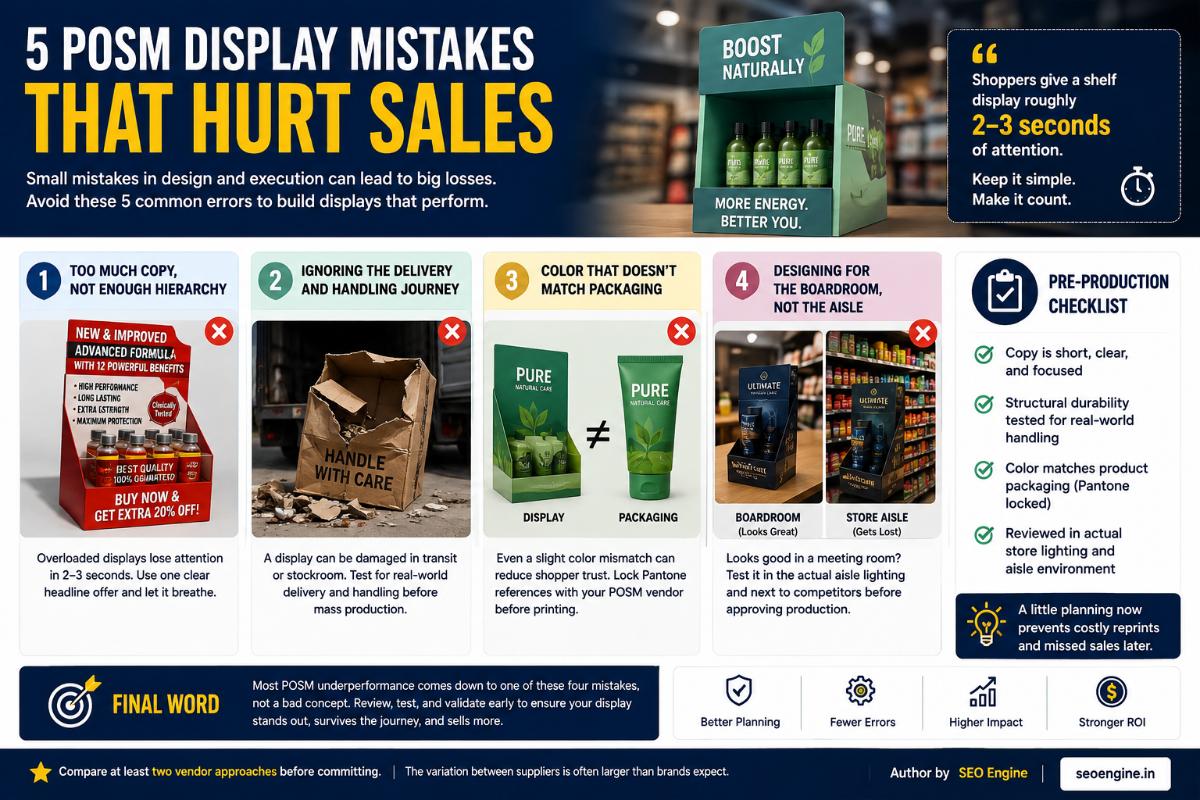
Each stage — from structural review through final quality checks — exists to catch a specific type of failure before it reaches a store counter, where fixing it becomes far more expensive than catching it during production. This is easy to underestimate on a first project and becomes obvious only after seeing how a rushed version performs against a properly planned one. Treat the first rollout or installation as a pilot even if it isn't formally labelled one — the lessons from it should shape everything that follows. Revisiting this once a quarter, rather than only at the start of a new campaign, keeps small issues from quietly becoming expensive ones by the time anyone notices.
Author bySEO Engine